
LinkedIn Patches #59 Answer
Stuck on today’s grid? Get the LinkedIn Patches #59 solution and expert logic to maintain your streak instantly. Beyond the answer, explore our tactical hints to refine your spatial reasoning and master the game through daily practice.
LinkedIn Patches #59 has ended!
You're viewing an older LinkedIn Patches answer. Click below to see today's latest Patches #78 answer and challenge!
View Today's Patches AnswerPatches #59 Answer
Patches #59 Expert Logic
🧩 Deep Logic Analysis
Today's grid offered a masterclass in using large shapes and corner pieces to anchor the entire solution. The key was to find the most constrained pieces first and build out from there. With a little practice, you can spot these starting points instantly.
Here’s the step-by-step breakdown:
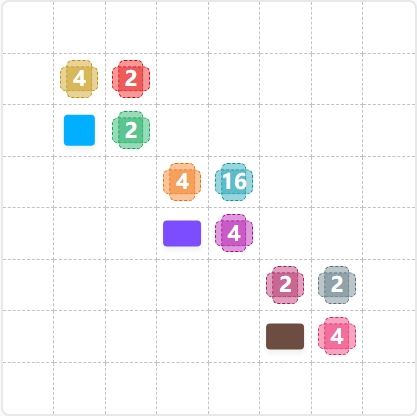
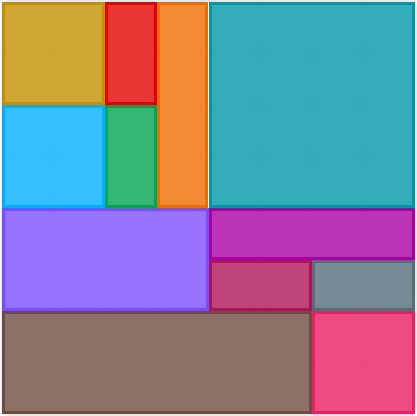
- Anchor the Corners: The most powerful opening move was to identify the corner pieces. The Yellow 4 clue was in the top-left (cell 1,1), making it a guaranteed 2x2 square in that exact spot. Similarly, the Light Pink 4 clue was in the bottom-right (cell 10,10), strongly suggesting a 2x2 square to lock down that corner.
- Place the Behemoth: The Cyan 16 is the largest piece and must be a 4x4 square. A 2x8 rectangle is technically possible but highly impractical in a 10x10 grid. Placing this massive 4x4 block created a significant boundary, forcing other pieces to accommodate it. It was pushed to the top edge by the combination of the Purple and Magenta pieces below it.
- The Squeeze Play: With the Yellow 2x2 and Cyan 4x4 in place, a vertical corridor was formed between them. This immediately constrained the pieces within it. The Red 2 was forced into a 1x2 vertical strip right next to the Yellow square. The Orange 4 and Green 2 were then compelled to fit as vertical strips in the remaining columns to fill the gap.
- The Chain Reaction: Placing these initial "wall" pieces triggered a domino effect. The Blue piece was now bordered on the top and right. Its width was locked at 3 units. The Purple rectangle clue was in a wide-open space, forcing it into a 6x2 horizontal orientation to fill the gap under the Blue piece.
- Solving the Final Cluster: This left the bottom-right section. With the Brown 7x2 rectangle defining the absolute bottom edge, and the Light Pink 2x2 square locked in the corner, the remaining L-shaped space could only be filled one way: by fitting the Pink 2 (1x2) and Grey 2 (2x1) pieces together.
🎓 Lessons Learned From Patches #59
- The Corner Anchor Strategy: Always scan the four corners of the grid first. A square piece (like the Yellow 2x2) whose clue is in a corner cell is almost always placed there. This gives you an immediate and unshakeable anchor to build the rest of your solution around.
- Prioritize Large & Awkward Shapes: The Cyan 16 (a 4x4 square) took up 16% of the entire board. By reasoning about its placement early, you drastically reduce the number of possibilities for every other piece. Similarly, long, thin rectangles (like the Brown 7x2) are highly constraining and should be prioritized.
- Solve in Clusters: Instead of randomly placing pieces, focus on "mini-puzzles" within the grid. The top-left (Yellow, Red, Blue) and bottom-right (Pink, Grey, Light Pink, Brown) were distinct clusters. Solving how they interact with each other is more efficient than tackling isolated pieces.
💡 Trivia
- Perfect Squares: This grid features two "perfect square" areas: 4 (2x2) and 16 (4x4). A fun mathematical property: the sum of the first 'n' odd numbers always equals a perfect square (n²). For example, the first four odd numbers (1+3+5+7) sum to 16.
- Semi-Prime Power: The Blue rectangle's area is 15. In number theory, 15 is a "semi-prime" because it is the product of two prime numbers (3 and 5). Puzzles often use semi-primes for rectangles because they have very few possible dimensions, which helps narrow down the solution logically.
❓ FAQ
Why did the Blue shape end up as a 3x5 rectangle when its clue was a solid square?
This is a fantastic observation and highlights a subtle rule variation. In the standard Patches rules, a square clue guarantees a square shape. However, some daily puzzles use a solid square clue to simply mean "a rectangle of unknown area." For Patches #59, the surrounding pieces logically forced a 3x5 dimension for the Blue shape, confirming that we were playing with this specific rule variant for the day.
Why couldn't the Cyan 16 be a 2x8 or 8x2 rectangle?
While 2x8 is a valid way to get an area of 16, such a long and thin shape is extremely restrictive in a 10x10 grid. It creates a massive wall that makes it nearly impossible for other pieces to fit. The more compact 4x4 square is a far more likely configuration. Consistent practice builds the intuition to test the most probable shape first, and in this case, the surrounding clues quickly eliminated the 2x8 possibility.
I got stuck on the bottom-right corner. How was the placement of the Pink, Grey, and Light Pink pieces determined?
That corner was a clever mini-puzzle. The breakthrough comes from identifying the Light Pink 4 as a 2x2 square and locking it into the absolute corner. This move defines clean boundaries. Once the large Brown 7x2 rectangle was placed along the bottom edge, it created a small, defined 3x2 area that had to be filled. The only way to tile that remaining space was with the precise combination of the Pink 2 (as a 1x2) and the Grey 2 (as a 2x1).