
LinkedIn Patches #60 Answer
Stuck on today’s grid? Get the LinkedIn Patches #60 solution and expert logic to maintain your streak instantly. Beyond the answer, explore our tactical hints to refine your spatial reasoning and master the game through daily practice.
LinkedIn Patches #60 has ended!
You're viewing an older LinkedIn Patches answer. Click below to see today's latest Patches #78 answer and challenge!
View Today's Patches AnswerPatches #60 Answer
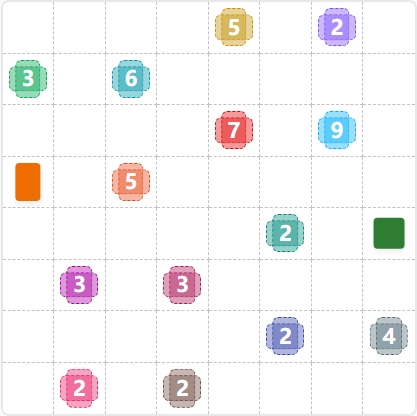
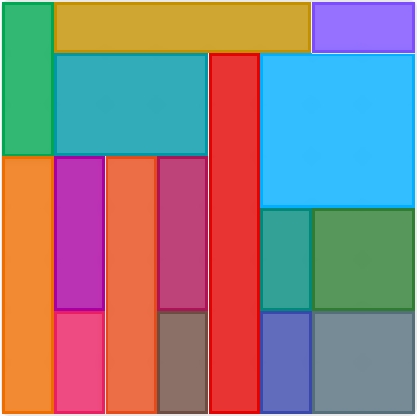
Patches #60 Expert Logic
🧩 Deep Logic Analysis
The key to this grid was identifying the most constrained pieces first—the shapes that have the fewest possible placements—and using them to anchor the rest of the solution.
- The Square Pegs: The most powerful starting points were the two perfect squares: the Light Blue 9 (which must be a 3x3 square) and the Grey 4 (which is almost certainly a 2x2 square). In an 8x8 grid, a 3x3 square has very limited placement options. By testing its fit, you quickly find its home in the upper-right quadrant.
- The Prime Directive: The next key piece is the Red 7. As a prime number, its shape is fixed to a 1x7 or 7x1 strip. Seeing the 3x3 square in place, it becomes obvious that the Red 7 fits perfectly as a 1x7 vertical strip running alongside it. This is the first major chain reaction.
- Anchors Aweigh: The puzzle included two fixed 1x1 blocks. These are non-negotiable anchors. The fixed green block on the right side must be part of a larger piece. The most likely candidate is the Grey 4. Placing the 2x2 Grey 4 to cover this anchor locks in the bottom-right corner.
- The Domino Effect: With the Blue 9, Red 7, and Grey 4 all placed, the entire right side of the grid becomes highly constrained. The remaining gaps create perfect, unmissable slots for the smaller pieces like the Green 2 and the Blue 2, which fall into place neatly.
- Working the Perimeter: Attention now shifts to the left edge. The fixed orange block must belong to the Orange 5 piece. The only logical fit is a long vertical strip. Similarly, the Green 3 at the top-left corner naturally forms a 1x3 strip. Placing pieces along the outer boundary is a fantastic strategy because it simplifies the complex interior space.
- The Final Squeeze: With the borders defined, the central column is all that remains. The Teal 6 (as a 3x2) is the largest remaining piece and has a clear spot. The rest of the pieces (Purple 3, Pink 2, etc.) now have only one possible orientation to fill the remaining gaps, completing the puzzle.
🎓 Lessons Learned From Patches #60
- Prioritize Inflexible Shapes: Always start by locating your perfect squares (4, 9, 16) and prime-numbered pieces (2, 3, 5, 7, 11). Their fixed shapes (e.g., 3x3 or 1x7) drastically reduce ambiguity and provide the strongest starting points for your logical deductions.
- Use the Frame: Don't just look at the clues; use the edges of the grid as a tool. Placing long strips like the Red 7 or Orange 5 along the border simplifies the remaining puzzle area into a more manageable shape. It's a fundamental practice that pays dividends.
- Connect Clues to Anchors: A fixed 1x1 block is a gift. Immediately scan your clues for a piece that could logically contain it. In this case, connecting the fixed green block to the nearby Grey 4 clue was essential to unlocking the bottom-right corner.
💡 Trivia
- The Power of Nine: The number 9 is the only single-digit perfect square (other than 1). In an 8x8 grid, this is uniquely powerful. A piece of area 8 could be 1x8 or 2x4, but a piece of area 9 must be 3x3, as a 1x9 strip wouldn't fit.
- Prime Real Estate: The number 7 is a Heegner number, a special type of number in advanced number theory. For our purposes, its most important quality is being prime. In geometry puzzles, prime-numbered areas are valuable because they can only form 1xN rectangles, giving you a predictable shape to work with.
❓ FAQ
Why must the Red 7 be a 1x7 strip?
Because 7 is a prime number, its only whole number factors are 1 and 7. In a puzzle made of rectangles, the area is length times width. Therefore, a shape with an area of 7 can only have dimensions of 1x7 (or 7x1), making it a long, thin strip.
Couldn't the Light Blue 9 be a 1x9 rectangle instead of a 3x3 square?
No, because the entire grid is only 8 cells wide and 8 cells tall. A 1x9 rectangle would be too long to fit anywhere on the board. The only possible configuration for a 9-area piece in an 8x8 grid is a 3x3 square. It's a critical grid-based limitation you learn to spot with practice.
The fixed green block was covered by the Grey 4 piece. Why the different colors?
This is a standard and clever mechanic in Patches. The fixed block acts as a positional anchor. It tells you that the larger piece covering that specific square must correspond to one of the clues on the board. Your job is to deduce which clue fits that space—in this case, the Grey 4 was the only logical candidate for that area, regardless of the anchor's color.