
LinkedIn Patches #61 Answer
Stuck on today’s grid? Get the LinkedIn Patches #61 solution and expert logic to maintain your streak instantly. Beyond the answer, explore our tactical hints to refine your spatial reasoning and master the game through daily practice.
LinkedIn Patches #61 has ended!
You're viewing an older LinkedIn Patches answer. Click below to see today's latest Patches #78 answer and challenge!
View Today's Patches AnswerPatches #61 Answer
Patches #61 Expert Logic
🧩 Deep Logic Analysis
The key to this 6x6 grid is identifying the most constrained pieces first. A disciplined process turns a seemingly complex board into a series of simple, logical steps.
-
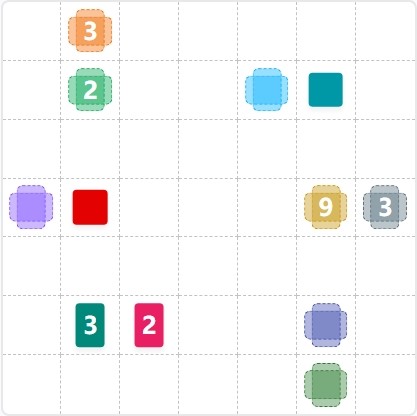
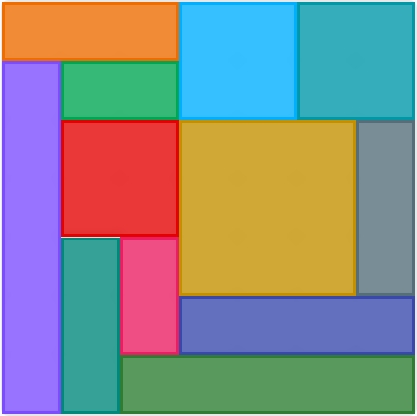
The Bottom-Row Block: The most powerful starting point isn't one clue, but two. Look at the bottom edge. We have the Dark Green 3 and the Pink 2. Since they are both touching the bottom boundary, they can only have a height of 1. This forces them to be a 3x1 and a 2x1 rectangle, respectively. Together, they occupy 5 of the 6 cells on the bottom row, leaving only one cell for another shape. This is the critical first move that cracks the puzzle open.
-
The Perfect Square Anchor: The next undeniable clue is the Yellow 9. On a 6x6 grid, a 1x9 rectangle is impossible. Therefore, the Yellow 9 must be a 3x3 square. This is a massive anchor. Knowing the bottom row is almost entirely filled by the 3 and 2 pieces, we can deduce that the 3x3 square cannot occupy rows 4-6. Its placement is now significantly restricted to the upper-middle portion of the grid.
-
The Corner Containment: In the top-left, the Orange 3 is pinned in the corner. It must be either a 1x3 vertical strip or a 3x1 horizontal one. The placement of the Light Green 2 clue just below it makes a 3x1 shape for the Orange piece highly probable, as it would neatly define that corner.
-
The Chain Reaction: Once you place the 3x1 (Dark Green) and 2x1 (Pink) on the bottom row, you've established a solid foundation. This forces the placement of the shapes above them, including the Yellow 9 square. Placing the 3x3 square then creates clear boundaries for the Red, Purple, and Grey 3 pieces, leading to a cascade of logical deductions until the grid is complete.
🎓 Lessons Learned From Patches #61
Every puzzle is a chance to refine your technique. With a little practice, you can internalize these strategies.
- The "Adjacency Block" Rule: Always scan the grid for clues that are locked together against an edge, like the Dark Green 3 and Pink 2. These combinations often provide a more powerful and definitive starting move than a single, isolated clue. They act as a single, larger constraint.
- Prioritize Inflexible Shapes: Immediately identify shapes with limited configurations. A 9 on a 6x6 grid can only be a 3x3 square. A 7 can only be a 1x7 strip. These are your anchors. Find them, place them, and build the rest of the puzzle around their certainty.
- Use the Grid Boundaries: The edges and corners are your best friends. A piece in a corner is constrained on two sides; a piece on an edge is constrained on one. This drastically reduces placement possibilities compared to a piece floating in the middle.
💡 Trivia
Here are a couple of fun facts inspired by today's grid:
- Perfectly Composite: The number 9 is the first odd composite number (a number that is not prime). It's also a perfect square (3²), which is why it's such a powerful anchor clue in a grid-based puzzle like Patches.
- Tiling Puzzles: This puzzle is a type of "dissection puzzle," specifically a "tiling puzzle," where a larger shape (a square) must be perfectly covered by smaller shapes (polyominoes). This field of recreational mathematics has fascinated thinkers from ancient Greece to modern computer scientists.
❓ FAQ
Why couldn't the Yellow 9 be a 1x9 rectangle?
A 1x9 rectangle has the correct area, but the puzzle board itself is only 6 cells wide and 6 cells tall. A shape that is 9 cells long simply cannot fit anywhere on the grid. Therefore, the only possible shape for the number 9 in this context is a 3x3 square.
What is the most definitive first move on this board?
While the 3x3 Yellow square is a fantastic anchor, the most certain and impactful first move involves the bottom row. The Dark Green 3 and Pink 2 clues are both on the bottom edge, which forces them into 3x1 and 2x1 horizontal strips. Placing these two pieces immediately solves a significant portion of the grid and severely restricts the placement of all adjacent shapes.
How do I know the orientation of the Orange 3 in the corner?
The Orange 3 in the top-left corner must be a 1x3 or a 3x1 rectangle. You determine its final orientation by looking at its neighbors. The Light Green 2 clue is directly below it. If the Orange 3 were a 1x3 vertical strip, it would create a long, narrow column that might be difficult for other pieces to fit around. By testing the 3x1 horizontal option first, you'll likely find that it creates more logical and accommodating spaces for the surrounding pieces, like the Light Green 2 and the Purple shape. This is a classic case of "test and confirm."